Minggu, 23 Oktober 2016

PDF Ebook Introduction to Electronic Circuit Design - 2 volume setBy Richard Spencer, Mohammed Ghausi

PDF Ebook Introduction to Electronic Circuit Design - 2 volume setBy Richard Spencer, Mohammed Ghausi

Getting the completed content of guide even in the soft file is truly exceptional. You could see how the Introduction To Electronic Circuit Design - 2 Volume SetBy Richard Spencer, Mohammed Ghausi is presented. Before you obtain the book, you might not know about just what the book is. However, for more practical thing, we will share you bit regarding this publication. This is guide to recommend that provides you a good idea to do. It is additionally offered in very fascinating recommendation, instance, and explanation.

Introduction to Electronic Circuit Design -  2 volume setBy Richard Spencer, Mohammed Ghausi

Introduction to Electronic Circuit Design - 2 volume setBy Richard Spencer, Mohammed Ghausi


Introduction to Electronic Circuit Design -  2 volume setBy Richard Spencer, Mohammed Ghausi


PDF Ebook Introduction to Electronic Circuit Design - 2 volume setBy Richard Spencer, Mohammed Ghausi

Invite again, we always welcome the viewers to be in this internet site. Are you the beginner to be reader? Don't bother. This site is actually readily available and suitable for everybody, Additionally, the individual that truly requires inspirations and resources. By this problem, we constantly make updates to obtain whatever brand-new. Guides that we collect and also provide in the lists are coming from lots of resources inside and also outside of this nation. So, never ever be uncertainty!

Checking out routine will constantly lead individuals not to completely satisfied reading Introduction To Electronic Circuit Design - 2 Volume SetBy Richard Spencer, Mohammed Ghausi, an e-book, ten e-book, hundreds e-books, and also much more. One that will make them really feel pleased is completing reviewing this publication Introduction To Electronic Circuit Design - 2 Volume SetBy Richard Spencer, Mohammed Ghausi and getting the notification of guides, after that finding the other following book to check out. It continues increasingly more. The moment to finish reading a publication Introduction To Electronic Circuit Design - 2 Volume SetBy Richard Spencer, Mohammed Ghausi will certainly be consistently various depending upon spar time to invest; one example is this Introduction To Electronic Circuit Design - 2 Volume SetBy Richard Spencer, Mohammed Ghausi

And why should read this publication? Several recognize that in this era, some books are covered in heavy things to load. Some other will certainly be additionally matched in language difficulty to recognize. Introduction To Electronic Circuit Design - 2 Volume SetBy Richard Spencer, Mohammed Ghausi is among the most up to date released books that has easy concept of thought with impressive facts and also lessons. It will certainly instruct you couple of points easy with very easy language to comprehend. Even you are from the immigrants, this book is also very easy enough to be equated.

Making you feel completely satisfied for about this publication, you could see as well as request for others regarding this book. The warranty is that you can get guide conveniently and get this terrific publication for your life. Reviewing book is very needed to do. When you believe it will not be useful in the meantime, it will certainly provide far more precious things, even often. By reading this publication, you can feel that it's really needed to acquire guide in this site because of the easy methods provided.

Introduction to Electronic Circuit Design -  2 volume setBy Richard Spencer, Mohammed Ghausi

For two-semester/three-quarter, upper-level courses in Electronic Circuit Design.

A basic understanding of circuit design is useful for many engineers—even those who may never actually design a circuit—because it is likely that they will fabricate, test, or use these circuits in some way during their careers. This text provides a thorough and rigorous explanation of both analog and digital transistor-level circuit design with a focus on the underlying principles of how different circuits work—instead of relying completely on design procedures or “rules of thumb.” In this way, students develop the intuition that is essential to understanding and solving design problems.


Note: 2 Volume Set


  • CD contents are available at www.prenhall.com/spencer

    • Sales Rank: #1103600 in Books
    • Published on: 2002-08-19
    • Ingredients: Example Ingredients
    • Original language: English
    • Number of items: 2
    • Dimensions: 10.00" h x 2.30" w x 7.90" l, 5.29 pounds
    • Binding: Paperback
    • 1132 pages

    From the Back Cover

    Richard R. Spencer received the B.S.E.E. degree from San Jose State University in 1978 and the M.S. and Ph.D. degrees in electrical engineering from Stanford University in 1982 and 1987, respectively. He has been with the Department of Electrical and Computer Engineering at the University of California, Davis, since 1986, where he is currently the Vice Chair for Undergraduate Studies and the Child Family Professor of Engineering. His research focuses on analog and mixed-signal circuits for signal processing and digital communication. He is an active consultant to the IC design industry. Professor Spencer is a senior member of the IEEE. He has won the UCD-IEEE Outstanding Undergraduate Teaching Award three times. He served on the IEEE International Solid-State Circuits Conference program committee for nine years, has been a guest editor of the IEEE Journal of Solid-State Circuits and has been an organizer and session chair for various IEEE conferences and workshops.

    Mohammed S. Ghausi is a Professor Emeritus of Electrical and Computer Engineering as well as Dean Emeritus of the College of Engineering, University of California, Davis. His research interests are in electronics circuits and systems, network theory, and active filters. He is a recipient of the Alexander von Humboldt Prize, the IEEE Centennial Medal, and the IEEE Circuits and Systems Society's 1991 Education Award.

    About the Author

    Richard R. Spencer received the B.S.E.E. degree from San Jose State University 'in 1978 and the M.S. and Ph.D. degrees in Electrical Engineering from Stanford University in 1982 and 1987, respectively. He is a senior member of the IEEE.

    He has been with the Department of Electrical and Computer Engineering at the University of California, Davis, since 1986, where is he is currently the Vice Chair for Undergraduate Studies and the Child Family Professor of Engineering. His research focuses on analog and mixed-signal circuits for signal processing and digital communication. He is an active consultant to the IC design industry.

    Professor Spencer has won the UCD-IEEE Outstanding Undergraduate Teaching Award three times. He served on the IEEE International Solid-State Circuits Conference program committee for nine years, has been a guest editor of the IEEE Journal of Solid-State Circuits and has been an organizer and session chair for various IEEE conferences and workshops.

    Mohammed S. Ghausi received the B.S.E.E., M.S. and Ph.D. degrees in Electrical Engineering from the University of California at Berkeley. He is a Professor Emeritus of Electrical and Computer Engineering as well as Dean Emeritus of the College of Engineering at UC Davis. His research interests are in electronics circuits and systems, and network theory, and he is the author or co-author of six textbooks. He was formerly a Professor of Electrical Engineering at New York University and later John F. Dodge Professor and Dean of Engineering and Computer Science at Oakland University. He is a recipient of the Alexander von Humboldt Prize, the IEEE Centennial Medal, the Circuits and Systems Society's 1991 Education Award, and the 1988 Outstanding Alumnus award of the Department of Electrical Engineering and Computer Science at the University of California at Berkeley.

    Excerpt. © Reprinted by permission. All rights reserved.

    In the forward to the first issue of the IEEE Journal of Solid-State Circuits in September 1966, Dr. James D. Meindl wrote

    "Within the past two decades, perhaps no sector of electronics has
    developed more rapidly than solid-state circuits. The nature of this
    development has imposed an expanding set of requirements on the breadth
    of knowledge one must possess in order to design a circuit well. – Most
    recently, the uniquely interdependent material, device, circuit, and system
    design considerations of large scale integration have again extended the
    scope of the problem of circuit design."

    It is remarkable that such broad statements, written over 30 years ago, are still accurate today. Given the complexity of present-day integrated circuits, circuit designers need to have a greater breadth of knowledge than ever before. This text is intended to provide an introduction to this important and rapidly changing discipline.

    Many engineers who will never design an electronic circuit need to have a basic understanding of the characteristics of electronic circuits because they fabricate, test, or use these circuits, or they design systems that eventually have to be implemented using these circuits. In addition, there are many techniques and principles used in the design of electronic circuits that find widespread use outside of this discipline (e.g., small-signal linearity and feedback). Therefore, for those of you who will not become circuit designers this text still has much to offer that will be important in your careers.

    The field of electrical engineering changes very rapidly. What can you expect to learn from this book that will still be useful in ten or twenty years? A great deal I hope. Although the devices, the economics of which components you favor, (e.g., resistors used to be cheaper than transistors, but the opposite is true in integrated circuits), and the computer-aided design tools will definitely change; there is still much that will stay the same. I can't predict exactly what will remain useful, but it seems unlikely that the concept of how to analyze a circuit so that you can see how to improve it will change, or that the concept of small-signal linearity will become unimportant, and certainly the ability you develop to solve problems will always be useful; after all, that is what engineers do.

    I have tried to concentrate on helping you learn the concepts in this book. To be good at circuit design and many other engineering disciplines requires a healthy dose of intuition. While you certainly need to know how to write nodal equations and solve them, no one is going to pay you to do that because you can't possibly compete with a computer program. As soon as any area of engineering is well enough understood that we can write rigid procedures guaranteed to produce a correct answer, a computer program will take over. Therefore, it is true that you will always be working with systems that you don't completely understand and systems that cannot be analyzed exactly. Design will always require an ability to model the real system with a model that is simultaneously simple enough to allow you to "see" what is going on and think of ways to improve the performance, while being complete enough to adequately model the salient characteristics of the system. In addition, design requires that we do our analyses in a different way; we aren't just seeking the answer, but an understanding of how we can modify the system and/or choose the component values to achieve a desired result. That is, at least in part, what it takes to do design.

    Therefore, I have focused on providing explanations and examples of how different circuits work and have focused on the underlying principles more than "rules of thumb" or design procedures, although some of these are certainly given. If you are searching for a cookbook approach, you won't find it here. However, remember that no one will pay you to follow set procedures. A designer is only valuable if he or she understands the problem well enough to come up with a good solution, even when no "procedure" exists.

    This textbook came together when the second author, who was looking for someone to revise an existing text, met with the first author, who was contemplating writing a new book. After discussion, it was agreed that a new textbook was needed, but that material from the older text could be used. The result is the book you have in your hands; most of the material is completely new and written by the first author, but some of it is adapted from Electronic Devices and Circuits: Discrete and Integrated, by Mohammed S. Ghausi.

    Organization and Features of the Text

    The material in this text is organized logically by topic, rather than sequentially in the order I would present it. Therefore, I do not expect that you will read this book linearly. Rather, I expect that you will at times, jump around a bit. Organizing the book in this way has two advantages; first, I do not dictate the order of presentation and second, it emphasizes the different types of analyses that must be used in the design process.

    Not specifying the order of presentation is important, because it allows each instructor more flexibility in choosing the topics to be covered and the depth of coverage of each topic. For example, you may cover field-effect transistor (FET) circuits first, or bipolar junction transistor (BJT) circuits first. This flexibility is partly brought about by placing the material on small-signal linearity in a separate chapter, and partly through the use of a generic transistor to present certain information that is common to both FETs and BJTs.

    Emphasizing the different types of analyses used in design is important, because students are frequently confused about when and why a particular analysis or model should be used. For example, why is a capacitor modeled as an open or short circuit for some analyses while it is retained for others? And how do I know which model I should use for the transistors in my circuit? By covering DC bias point analysis, small-signal midband AC analysis, frequency response, large-signal AC performance, and digital circuits in different chapters, I emphasize the models, methods, and motivation for each type of analysis. Where possible, one example will be used throughout several chapters so, for example, you can learn about the DC biasing, midband gain, frequency response and large-signal swing of a common-emitter amplifier using a single example circuit. But the distinctions between the different types of analyses are emphasized by having each of them in a different chapter.

    One feature of this text is the use of a generic transistor to present many of the basic principles that are common to FET and BJT circuits. While this transistor is fictitious, the terminal names used focus attention on the functionality of the device and the models used are the same as real transistors. The advantages of using this slight fiction are:

  • It helps to develop intuition about the operation of a given type of circuit without reference to the active device used (for example, a common-emitter BJT amplifier, common-source FET amplifier and even a common-cathode vacuum tube amplifier have much in common).
  • It allows common information to be presented once without dictating which type of transistor is covered first.
  • It helps to foster a modern device-independent way of thinking about circuits.
  • With this mode of thinking, the designer first considers the functionality of the circuit and then considers which type of device is best suited to a given application.

    Another feature of this text is that it often breaks complex topics up into different levels of coverage to enable an instructor to decide how much detail to cover on a given topic at a given time. For example, most sections in Chapter 2 describing the operation of solid-state devices have an intuitive description followed by a more detailed derivation of the equations. The intuitive description can be used by students who have already had—or will have—a more detailed course in device physics. The detailed derivations can be used by students who have only one course covering electronic circuits and devices. As another example, the frequency response chapter presents both first-order methods for estimating the band-width of simple circuits (e.g., the Miller effect) and the more general zero-value time constant method. The more advanced zero-value time constant method may be left out of an introductory course taken by general Electrical and Computer Engineering students and can then be added in during a second-term course for students specializing in the circuits area.

    One other feature of this text is that full solutions are provided for the exercises, rather than just numerical answers. It is my belief that if an exercise is involved enough to be of any real use to the student, simply providing the numerical answer is insufficient.

    The final major feature of this text is the use of Asides. Asides are used for two different purposes. Sometimes, they are used to present material that is essential, but the student may already know from a prerequisite course, or may want to refer to later. Having the material in a separate Aside allows students to skip it or easily refer to it later. Asides are also sometimes used to present optional material that may expand on or further explain the material covered in the section. A separate index is provided to the Asides.

    The CD that accompanies this text is also important. In addition to containing an evaluation version of the MicroSim DesignLab 8 software, which includes PSPICE, a postprocessor (PROBE), and a schematic capture program, the CD also includes all of the simulation files for over 100 exercises, examples, figures, and comments in the text. There are indexes on the CD for these files so that you can find, for example, a simulation file that shows how to use PSPICE to find the input or output resistance of an amplifier. In addition, the CD contains companion sections for a few places in the text where material was not printed for the sake of brevity (including two appendixes). I felt that some students would want this material.

    There is more than enough material in this text for a two semester or three quarter sequence in electronic circuit design. Several different instructors have used drafts of this text for a two-quarter sequence at the University of California at Davis for several years. The first quarter of that sequence is required of all Electrical and Computer Engineering majors and covers Chapters 1 and 6, parts of Chapters 2, 7, and 8, the introductory material in Chapter 9, Chapter 14 and part of Chapter 15. The second quarter then adds the zero-value time constant method in Chapter 9, covers all of Chapter 10 and some of Chapters 4,12, and 13. The material in Chapters 5 and 11 is used as reference material in other courses and Chapter 3 is left for the students to read, if they are interested.

    Introduction to Electronic Circuit Design - 2 volume setBy Richard Spencer, Mohammed Ghausi PDF
    Introduction to Electronic Circuit Design - 2 volume setBy Richard Spencer, Mohammed Ghausi EPub
    Introduction to Electronic Circuit Design - 2 volume setBy Richard Spencer, Mohammed Ghausi Doc
    Introduction to Electronic Circuit Design - 2 volume setBy Richard Spencer, Mohammed Ghausi iBooks
    Introduction to Electronic Circuit Design - 2 volume setBy Richard Spencer, Mohammed Ghausi rtf
    Introduction to Electronic Circuit Design - 2 volume setBy Richard Spencer, Mohammed Ghausi Mobipocket
    Introduction to Electronic Circuit Design - 2 volume setBy Richard Spencer, Mohammed Ghausi Kindle

    Introduction to Electronic Circuit Design - 2 volume setBy Richard Spencer, Mohammed Ghausi PDF

    Introduction to Electronic Circuit Design - 2 volume setBy Richard Spencer, Mohammed Ghausi PDF

    Introduction to Electronic Circuit Design - 2 volume setBy Richard Spencer, Mohammed Ghausi PDF
    Introduction to Electronic Circuit Design - 2 volume setBy Richard Spencer, Mohammed Ghausi PDF

    Free Ebook Satyajit Ray: In Search of the Modern (The Scarecrow Filmmakers Series)By Suranjan Ganguly

    Free Ebook Satyajit Ray: In Search of the Modern (The Scarecrow Filmmakers Series)By Suranjan Ganguly

    To overcome your daily problems, related to your jobs, this book can be read page by pages. Of course, when you have no deadline jobs, you will also need what offered by this book. Why? It serves something interesting to learn. When you really love to read, reading something, what you can enjoy is the topic that you really know and understand. And here, Satyajit Ray: In Search Of The Modern (The Scarecrow Filmmakers Series)By Suranjan Ganguly will concern with what you really need now and you need actually for your future.

    Satyajit Ray: In Search of the Modern (The Scarecrow Filmmakers Series)By Suranjan Ganguly

    Satyajit Ray: In Search of the Modern (The Scarecrow Filmmakers Series)By Suranjan Ganguly


    Satyajit Ray: In Search of the Modern (The Scarecrow Filmmakers Series)By Suranjan Ganguly


    Free Ebook Satyajit Ray: In Search of the Modern (The Scarecrow Filmmakers Series)By Suranjan Ganguly

    Welcome to our spectacular internet site. This is a website that could make everybody feel so relieved. This is the one that will certainly supply all completed book collections from the publishers around the world. Locating the book from other nations in this rest is very easy, additionally to discover guides for inside of the nation. That will be so easy after that.

    The important things to do and get over with the existence of the requirements can be accomplished by taking such provided feature of book. As usual, publication will certainly function not only for the expertise as well as something so. But, practically, it will likewise show you what to do and not to do. When you have wrapped up that the book used, you could have the ability to discover exactly what the author will share to you.

    Look as well as search racks by shelves to locate this book. But sometime, it will be nonsense. As a result of this problem, we now provide the fantastic deal to create the short method to obtain guides from lots of resources get in double-quick times. By this way, it will really ease you to earn Satyajit Ray: In Search Of The Modern (The Scarecrow Filmmakers Series)By Suranjan Ganguly so all set to obtain in double-quick time. When you have actually done and also acquired this publication, it is much better for you to swiftly begin reading. It will lead you to get the disciplines and also lessons rapidly.

    And afterwards, when you actually enjoy to see exactly how the demands of this book as excellent book, you can straight get it as remarkable book. This book is truly one more time advised in order to enhance you to assume an increasing number of. When Satyajit Ray: In Search Of The Modern (The Scarecrow Filmmakers Series)By Suranjan Ganguly has actually been accumulated, you should have known exactly how this publication is needed. So, which time should be the best time to begin obtaining and reading this book? As soon as possible is the very best answer.

    Satyajit Ray: In Search of the Modern (The Scarecrow Filmmakers Series)By Suranjan Ganguly

    Suranjan Ganguly's book examines in depth six of Ray's major films focusing on issues such as human subjectivity, the importance of education, the emancipation of women, the rise of the new middle class, and the crisis of identity in post-Independence India.

    • Sales Rank: #6053717 in Books
    • Brand: Brand: Scarecrow Press
    • Published on: 2007-02-03
    • Released on: 2007-02-03
    • Original language: English
    • Number of items: 1
    • Dimensions: 8.90" h x .63" w x 6.00" l, .65 pounds
    • Binding: Paperback
    • 208 pages
    Features
    • Used Book in Good Condition

    Review
    Ganguly's meticulously researched study of the master, beautifully illustrated with examples of the brilliant camerawork of Ray's films, will be of immense help to the reader in situating his complex cinematic characters in the cultural context to which they belong. (Scope: An Online Journal of Film and Television Studies)

    Recommended. (CHOICE, November 2007, Vol. 45, No. 3)

    ...provides a solid introduction to the themes and stylistics of the great Bengali director...Ganguly's useful bibliography makes this an excellent place for undergraduates to start. (CHOICE)

    Satyajit Ray (1921-1992) revolutionized Indian film and is widely considered to be one of the great filmmakers of all time. In this work, Ganguly (U. of Colorado) examines Ray's negotiations with history and modernity in the six major films he made between 1955 and 1970: Pather Panchali, Aparajito, Apur Sansar, Charulata, Aranyer Din Ratri, and Pratidwandi. Overall, Ganguly sets himself the task of examining how Ray's films convey the filmmaker's belief that the modern is best understood as a total experience in relation to how people express themselves in a changing society, although more specific concerns such as Ray's preoccupation with subjectivity in contexts such as education, urban culture, and the management of grief; the nature of action in a society suspended between apathy and revolution; and writing as a form of female discourse frequently intrude. This is a paperbound edition of a work first published in 2000. (Reference and Research Book News, August 2007)

    About the Author
    Suranjan Ganguly teaches film at the University of Colorado at Boulder with a special emphasis on European and Asian cinema.

    Satyajit Ray: In Search of the Modern (The Scarecrow Filmmakers Series)By Suranjan Ganguly PDF
    Satyajit Ray: In Search of the Modern (The Scarecrow Filmmakers Series)By Suranjan Ganguly EPub
    Satyajit Ray: In Search of the Modern (The Scarecrow Filmmakers Series)By Suranjan Ganguly Doc
    Satyajit Ray: In Search of the Modern (The Scarecrow Filmmakers Series)By Suranjan Ganguly iBooks
    Satyajit Ray: In Search of the Modern (The Scarecrow Filmmakers Series)By Suranjan Ganguly rtf
    Satyajit Ray: In Search of the Modern (The Scarecrow Filmmakers Series)By Suranjan Ganguly Mobipocket
    Satyajit Ray: In Search of the Modern (The Scarecrow Filmmakers Series)By Suranjan Ganguly Kindle

    Satyajit Ray: In Search of the Modern (The Scarecrow Filmmakers Series)By Suranjan Ganguly PDF

    Satyajit Ray: In Search of the Modern (The Scarecrow Filmmakers Series)By Suranjan Ganguly PDF

    Satyajit Ray: In Search of the Modern (The Scarecrow Filmmakers Series)By Suranjan Ganguly PDF
    Satyajit Ray: In Search of the Modern (The Scarecrow Filmmakers Series)By Suranjan Ganguly PDF

    Senin, 17 Oktober 2016

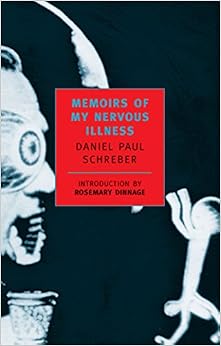
    PDF Ebook Memoirs of My Nervous Illness (New York Review Books Classics), by Daniel Paul Schreber Rosemary Dinnage

    PDF Ebook Memoirs of My Nervous Illness (New York Review Books Classics), by Daniel Paul Schreber Rosemary Dinnage

    Get the fascinating deal from this publication to check out. You will certainly not obtain just the perception yet additionally experience to give in every circumstance. Get also the warranty of how this book is used. You will be conveniently locating this soft file of guide in the web link that we provide. Unlike the others, we always offer the extremely professional book from expert authors. As Memoirs Of My Nervous Illness (New York Review Books Classics), By Daniel Paul Schreber Rosemary Dinnage, it will certainly offer you symmetrical system of how a publication must require.

    Memoirs of My Nervous Illness (New York Review Books Classics), by Daniel Paul Schreber Rosemary Dinnage

    Memoirs of My Nervous Illness (New York Review Books Classics), by Daniel Paul Schreber Rosemary Dinnage


    Memoirs of My Nervous Illness (New York Review Books Classics), by Daniel Paul Schreber Rosemary Dinnage


    PDF Ebook Memoirs of My Nervous Illness (New York Review Books Classics), by Daniel Paul Schreber Rosemary Dinnage

    Feel burnt out to invest the leisure time or weekend break or holidays without doing anything valuable? Hanging out also often times is very easy, very simple. However, are all valuable sufficient? It is not your time to invest the time thrown away. This is the time to enjoy all downtime, but with such meaningful activities. Even having vacation by trips somewhere, it is likewise helpful. As well as right here, you can additionally save your couple of times to check out a book; the Memoirs Of My Nervous Illness (New York Review Books Classics), By Daniel Paul Schreber Rosemary Dinnage is what we recommend for you.

    Seeing an internet site that is extremely finished as in this location is uncommon. So, it's your good luck to discover us. As well as pertaining to the Memoirs Of My Nervous Illness (New York Review Books Classics), By Daniel Paul Schreber Rosemary Dinnage, we provide you this book in soft file. So, you will not should feel difficult to bring the published book when planning to review it every single time. If you really feel bemused about the best ways to get it, you can conserve the documents in your gizmo as well as various other device. So, when you open up the device, you can be reminded concerning the book inside.

    This publication is a very renowned book that is created by famous author. We supply this book because certainly you will certainly need it. When you find this book here, it is since we accumulate all superb publications from several resources and also collections in the world. It is also very easy to obtain this book through this web site. Below, you will certainly find such link that could attach you to the collection of the nation based on guide searched. Yet right here, we likewise exactly obtain the web link that reveals you the soft documents of guide straight.

    This is what you have to carry out in needing exactly what we provide. This is not nonsense, this is something to create far better concept. Essentially, publication will certainly not constantly influent someone to act and also assume far better. It will depend upon exactly how individuals will gaze and also think of the lesson given by the book. Yet, when you have handled reading the book arranged, the Memoirs Of My Nervous Illness (New York Review Books Classics), By Daniel Paul Schreber Rosemary Dinnage will certainly have no matter to call for.

    Memoirs of My Nervous Illness (New York Review Books Classics), by Daniel Paul Schreber Rosemary Dinnage

    Amazon.com Review

    Daniel Paul Schreber began Memoirs of my Nervous Illness in February 1900 while confined in an asylum, as part of an appeal for release. Schreber, second son (the first committed suicide) of an abusive father, was at the peak of a brilliant career in Leipzig when he was appointed Presiding Judge of the Saxon High Court of Appeals. Alas, the stress of his new job proved too much for him, and before long he was hearing voices and feeling suicidal. Within weeks he was committed, having rapidly descended into madness, and was placed under the care of Dr. Paul Emil Flechsig. From the start, Schreber struggled to make sense of what he was seeing and hearing, and in fact Memoirs is so lucid and self-aware, so internally consistent and insightful, that he was released on its strength. Still, reading this man's prose is a lesson in subjective reality, by turns funny and terrifying. I existed frequently without a stomach.... In the case of any other human being this would have resulted in natural pus formation with an inevitably fatal outcome; but the food pulp could not damage my body because all impure matter in it was soaked up again by the rays. As Christianity alone could not explain what seemed to be happening to him, Schreber pieced together a complex theology involving a divided God with dark and light incarnations, whose "rays" and "nerves" interacted in various ways with humans. God was also his personal tormentor, in league with Flechsig to commit "soul-murder" by manipulating his nerves. Further, Schreber believed that he was being literally "unmanned" so that God could sexually violate him and conceive a new human race: "But as soon as I am alone with God ... I must continually or at least at certain times strive to give divine rays the impression of a woman in the height of sexual delight..." Schreber had a hard time believing in the "fleeting-improvised-men" who flitted in and out of his life, and grew convinced that he was the only human left in a world of shadows. But he did know that something was wrong. He would hear the birds in the asylum's garden ask him, over and over, "Are you not ashamed?" And he was aware that his bellowing, banging on the piano, and other bodily manifestations of God's manipulation of his nerves (or "miracles") were startling to others, to say the least. Many of Schreber's delusions had to do with escaping his body--the constant babble of thousands of voices in his head were infuriating, as was his inability to cease thinking: The sound which reaches my own ear--hundreds of times every day--is so definite that it cannot be a hallucination. The genuine "cries of help" are always instantly followed by the phrase which has been learnt by rote: "If only the cursed cries of help would stop." Memoirs of My Nervous Illness succeeds on many levels: as a memoir, as imaginative literature, and as a serious work of mythology. Flechsig makes a menacing and inscrutable villain, representing materialistic thinking and conventional reality--no help at all. Schreber, meanwhile, is the classic hero, struggling to stay sane in a cruel and capricious universe. --Therese Littleton

    Read more

    About the Author

    Daniel Paul Schreber (1842-1911) was the son of the preeminent nineteenth-century German medical authority on child-rearing. Before his mental collapse, he served as the chief justice of the supreme court of the state of Saxony.Rosemary Dinnage is the author of The Ruffian on the Stair: Reflections on Death, One to One Experiences of Psychotherapy, and Annie Besant. She is a regular contributor to The New York Review of Books, the Times Literary Supplement, and the London Review of Books. She lives in London.

    Read more

    Product details

    Series: New York Review Books Classics

    Paperback: 488 pages

    Publisher: NYRB Classics; Revised ed. edition (January 31, 2000)

    Language: English

    ISBN-10: 094032220X

    ISBN-13: 978-0940322202

    Product Dimensions:

    5 x 1.3 x 8 inches

    Shipping Weight: 1 pounds (View shipping rates and policies)

    Average Customer Review:

    3.5 out of 5 stars

    12 customer reviews

    Amazon Best Sellers Rank:

    #277,293 in Books (See Top 100 in Books)

    I cannot get past the tiny print--And I don't need glasses to read up close! I won't force myself to read lines of print that small. (And I think it's a translation, which makes it more of a trial!)

    Not finished yet. A very hard read. Not enthused about the writing style. I've been reading it for several months now and just can't quite get it done. But there are some very plausible concepts to what is being spoken about, for instance I see some correlations with some of the Seth concepts about reality, space and time. I guess overall it's an okay book, just time consuming.

    I wonder what cases he was working on while he was a judge and wonder if his work on them had threatened anyone in power, and thus Schreber was targeted. If true, I don't think they expected Schreber to experience what he did and even less so, bravely and courageously write it down for all the world to see. What did he see? Perhaps the true state of one's being (the construct that is one's mind) that somehow got dislodged, which when it found itself outside the mind, didn't know quite what to do about it.

    One of my most cherished books in my library. This book is easy to misunderstand, in its intent and its revelation. I cannot even claim any authoritative knowledge, so this is only an interpretation.I think that the history of horrible and sadistic abuse at the hands of his father and the fact that his elder brother became mentally ill as well and then committed suicided only overshadows the importance of Schreber's experience and message. Knowing his history allows the reader to be dismissive about the authenticity of his experience. And that is exactly what one should not do.What should strike the reader is how "sane" Schreber comes across as with the rational, almost objective and detached, and lucid way he writes about his illness and experience in the book. He is most definitely in control of his cognitive functions and he proves this to be the case by being freed from institutionalization and returning to the bench. That said, he is still utterly convinced of the truth of his experience, and while able to function quite normally, he refuses to see his experience as delusional, that is, he still believes in the authenticity of his experience and his religious and metaphysical claims. It was this point that intrigued me the most. Now, if you were to be institutionalized for paranoid delusions, you would not be released if you maintained that your delusions were real and not delusions (at least, the doctors would not recommend you leaving even if you checked in voluntarily).How is the reader to take the paradox that Schreber presents: is he truly mentally fit by the end of the book or is he still ill due to his insistence upon the reality of his delusions? It is this problem that should make the reader begin to take Schreber more seriously and allow them to analyze the philosophy in his experience instead of glossing over it as sick fantasy. Or should we take Schreber seriously? In analyzing the world view in his memoirs I would say we should give him a charitable reading.Because of my conviction, I think of this book as more of a work of philosophy, specifically metaphysics, than the writings of a madman. While this memoir is an insightful look into the mental constructs of a paranoid schizophrenic it holds much more in its pages that needs to be accounted for. It is well known that schizophrenics have a tendency towards entertaining, as well as acting upon, strange religious constructs of their own mind (modulo the question why, that is for the psychotherapist to answer) but a treatment of Schreber's highly developed and thorough system would not be a waste of time and should be taken up.Here are some particulars that come to mind: his incorporation of a misunderstood zoroastrianism, his developed cosmology/cosmogony that includes a concern of extraterrestrial states of the universe, his preoccupation with evil and redemption, concern over the state of affairs of reality versus his own, an insistence on his own existential import in abrogating any danger to others, an equal insistence on non-violence even when he thought his person to be under threat, a peculiar ontology that admits immaterial objects as having substance, a philosophy of mind that gives explanatory power to a theory on the mind-body problem, and etc.I say all this in order to put forth the idea that had Schreber not been a schizophrenic, his metaphysics would, or at least parts of it should, be taken serious from a philosophical standpoint. Instead we have clinicians giving theories on why he had such delusions rather than countenancing the importance or non-importance of them philosophically. If you want to chalk up his memoirs as just a horrible experience of a madman and not a carefully thought out system, then you can. But, you will have to give some account for the fact that when he fashioned the book for publication it was according to a thematic (not chronological, but instead analytic) system by a man in control of his cognitive abilities. And, you will also need to give an account of how a madman was cognitively able to write such an accomplishment when no schizophrenic since has been able to do the same.Regardless of my own convictions in why you should read the book (philosophy aside), this book is ultimately a sublime treatise on the perseverance of the human spirit. Despite the sometimes horrific experiences that Schreber relates (this book is not for the timid of heart), he is always positive and upbeat in his telling. The fact that he is convinced that he will get through it is uplifting; and even though he was re-institutionalized for the remainder of his life after the death of his wife eight years later, his indomitable spirit of hope for himself and mankind leaves the reader challenged to do the same in the face of extraordinary circumstances.

    An extraordinary account by Daniel Paul Schreber of his breakdown, his "hallucinations", his journey. A classic book in psychiatry. It is thrilling. So many of the terms he uses vibrate with us today: soul murder, nerve rays, his connection with God which involves both control and surrender, the way his hallucinations enabled him to act out being a woman in sexual intercourse (something he thought about just before he went mad). Freud spoke of hallucinations as restoring lost objects. Schreber spoke of a blackout in which the world (and self) were destroyed, then "miracled up" (his term) again in a new key. Freud's writings on Schreber (based on Schreber's memoir) are a must too. The two together make one of the most thrillng trips through a mad dimension that is relevant for every human being. I write of both Schreber and Freud from a contemporary viewpoint in my chapter on Schreber in The Psychotic Core. Right now I happen to be thinking of Phillip K Dick - the words that most appear in a word count of his writings were psychosis and schizophrenia. I don't know if he read Schreber or Freud's account of Schreber - but he would have loved them.Michael EigenAuthor, Flames from the Unconscious

    new

    Great, fast

    this is one of my favorite books of all time. NYRB is now my favorite place on earth! THANK YOU THANK YOU! (ps. this is a classic, all should read it)

    Memoirs of My Nervous Illness (New York Review Books Classics), by Daniel Paul Schreber Rosemary Dinnage PDF
    Memoirs of My Nervous Illness (New York Review Books Classics), by Daniel Paul Schreber Rosemary Dinnage EPub
    Memoirs of My Nervous Illness (New York Review Books Classics), by Daniel Paul Schreber Rosemary Dinnage Doc
    Memoirs of My Nervous Illness (New York Review Books Classics), by Daniel Paul Schreber Rosemary Dinnage iBooks
    Memoirs of My Nervous Illness (New York Review Books Classics), by Daniel Paul Schreber Rosemary Dinnage rtf
    Memoirs of My Nervous Illness (New York Review Books Classics), by Daniel Paul Schreber Rosemary Dinnage Mobipocket
    Memoirs of My Nervous Illness (New York Review Books Classics), by Daniel Paul Schreber Rosemary Dinnage Kindle

    Memoirs of My Nervous Illness (New York Review Books Classics), by Daniel Paul Schreber Rosemary Dinnage PDF

    Memoirs of My Nervous Illness (New York Review Books Classics), by Daniel Paul Schreber Rosemary Dinnage PDF

    Memoirs of My Nervous Illness (New York Review Books Classics), by Daniel Paul Schreber Rosemary Dinnage PDF
    Memoirs of My Nervous Illness (New York Review Books Classics), by Daniel Paul Schreber Rosemary Dinnage PDF